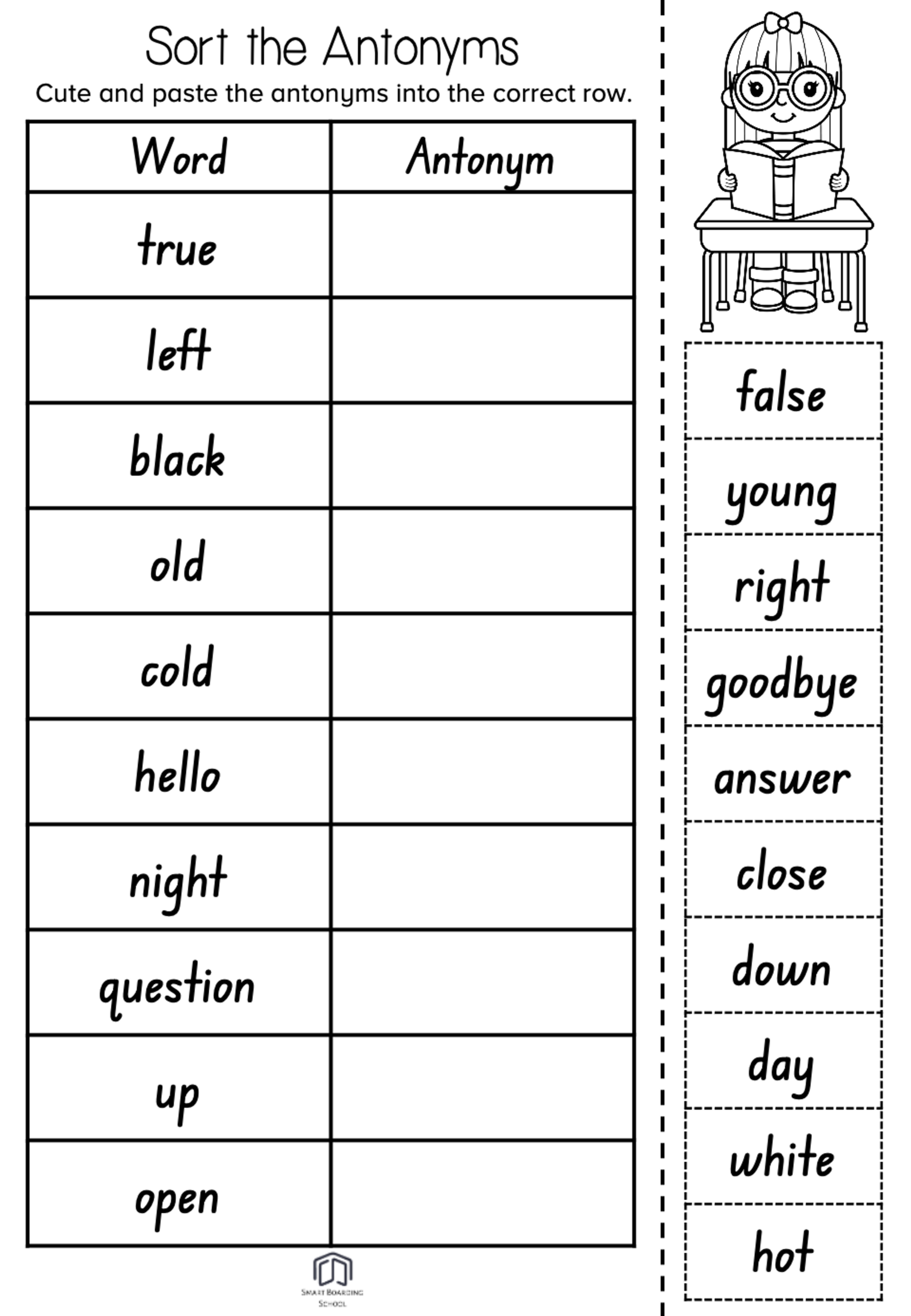
Introducing children to the concept of antonyms through engaging activities can significantly enhance their vocabulary and comprehension skills. Kindergarten worksheets that focus on cut and paste antonyms provide a hands-on learning experience that is both fun and educational. These activities not only help children understand the meaning of opposites but also develop their fine motor skills as they cut and paste various words and images. In this article, we will explore effective strategies for using cut and paste worksheets to teach antonyms in a kindergarten setting.
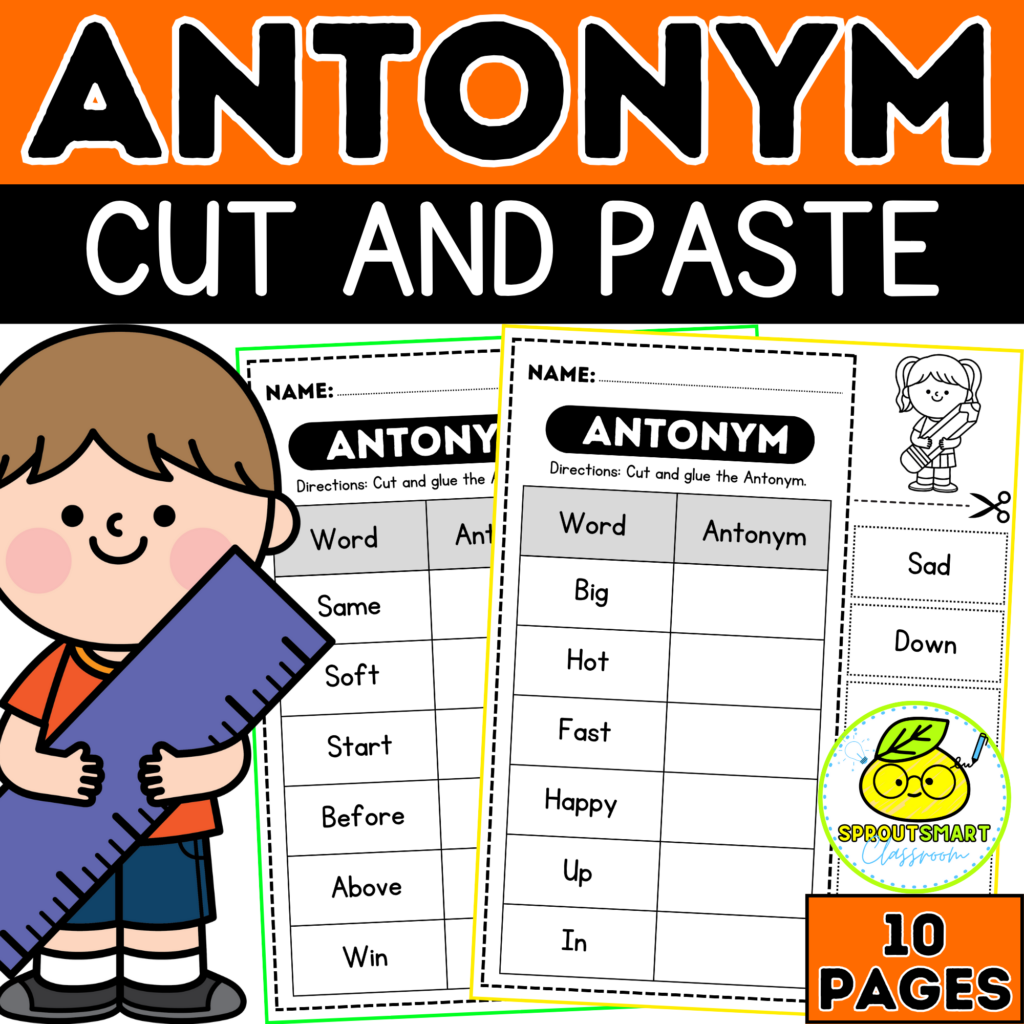
Kindergarten Worksheets Cut And Paste Antonyms
Understanding Antonyms in Early Education
Antonyms are words that have opposite meanings, such as “hot” and “cold” or “big” and “small.” Teaching antonyms to young learners is essential for building their vocabulary and enhancing their language skills. By incorporating cut and paste activities, educators can create an interactive environment where children can visually connect words with their meanings. This method caters to different learning styles, making it easier for children to grasp the concept of opposites.
Benefits of Cut and Paste Activities
- Fine Motor Skill Development: Cutting and pasting require precision, helping children improve their hand-eye coordination.
- Visual Learning: Associating words with images reinforces understanding through visual cues.
- Engagement: Hands-on activities keep children engaged and motivated to learn.
- Cognitive Skills: Sorting words into categories enhances critical thinking as children determine which words are opposites.
Creating Effective Worksheets
When designing cut and paste worksheets for antonyms, consider the following elements:
- Clear Instructions: Provide simple, step-by-step directions for cutting out words and pasting them next to their antonyms.
- Age-Appropriate Content: Use familiar words that kindergarteners encounter in their daily lives.
- Visual Aids: Include images alongside words to help children make connections between the concepts.
Sample Activities Using Cut and Paste Worksheets
Here are some engaging activities that utilize cut and paste worksheets to teach antonyms:
Activity 1: Matching Words with Pictures
Create a worksheet with a list of antonym pairs alongside corresponding images. For example, pair “hot” with a sun image and “cold” with an ice cube. Children can cut out the words and paste them next to the correct images. This activity reinforces word recognition while making learning enjoyable.
Activity 2: Antonym Sorting Game
Prepare a set of word cards featuring various adjectives. Have children cut out the cards and sort them into two columns: one for each antonym pair. For instance, they can place “big” in one column and “small” in another. This sorting activity encourages critical thinking as they identify opposites.
Activity 3: Create Your Own Antonym Book
Encourage creativity by having children create a mini-book of antonyms. Each page can feature one pair of antonyms with illustrations. Children can cut out pictures from magazines or draw their own images to represent each word. This personalized approach fosters ownership of their learning experience.
Tips for Successful Implementation
To ensure successful implementation of cut and paste antonym activities, consider these tips:
- Adult Supervision: Always supervise young children when using scissors to ensure safety.
- Pre-Cut Options: For younger or less experienced students, provide pre-cut pieces to simplify the activity.
- Create a Learning Environment: Set up a designated area with all necessary materials, including scissors, glue sticks, and colored paper.
Integrating Antonyms into Daily Learning
Incorporating antonym activities into daily lessons can reinforce learning beyond worksheets. Use everyday situations to discuss opposites, such as comparing temperatures (hot vs. cold) during weather discussions or sizes (big vs. small) during playtime. This real-world application helps solidify understanding in a practical context.
The Role of Parents in Learning Antonyms
Parents can play an essential role in reinforcing antonym concepts at home. Encourage them to engage in conversations about opposites during daily activities, such as cooking (hot vs. cold) or shopping (full vs. empty). Providing parents with resources like printable worksheets can also support continued learning outside the classroom.
Conclusion
The use of kindergarten worksheets cut and paste antonyms offers an interactive way for young learners to explore language concepts while developing essential skills. By integrating these engaging activities into lessons, educators can create a dynamic learning environment that fosters vocabulary growth and cognitive development. For more resources on early childhood education, visit CutPasteWorksheets.net.
If you’re looking for additional resources on hands-on learning activities, check out our collection of printable worksheets designed specifically for preschoolers and kindergarteners at preschool worksheets.
Download Kindergarten Worksheets Cut And Paste Antonyms
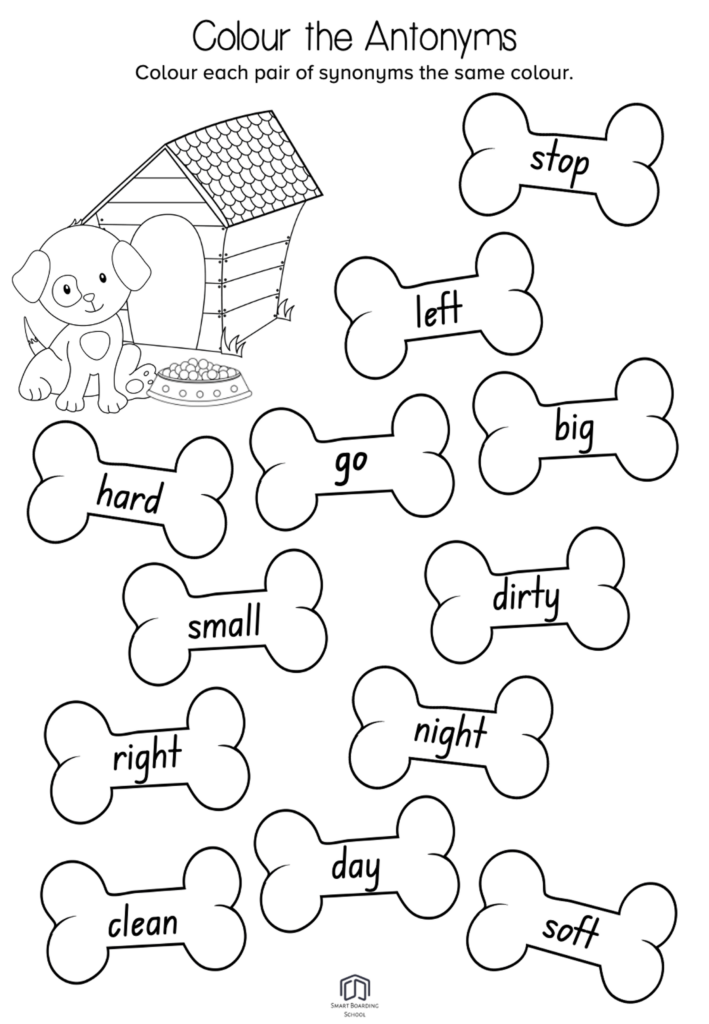
Worksheet Colour The Antonyms
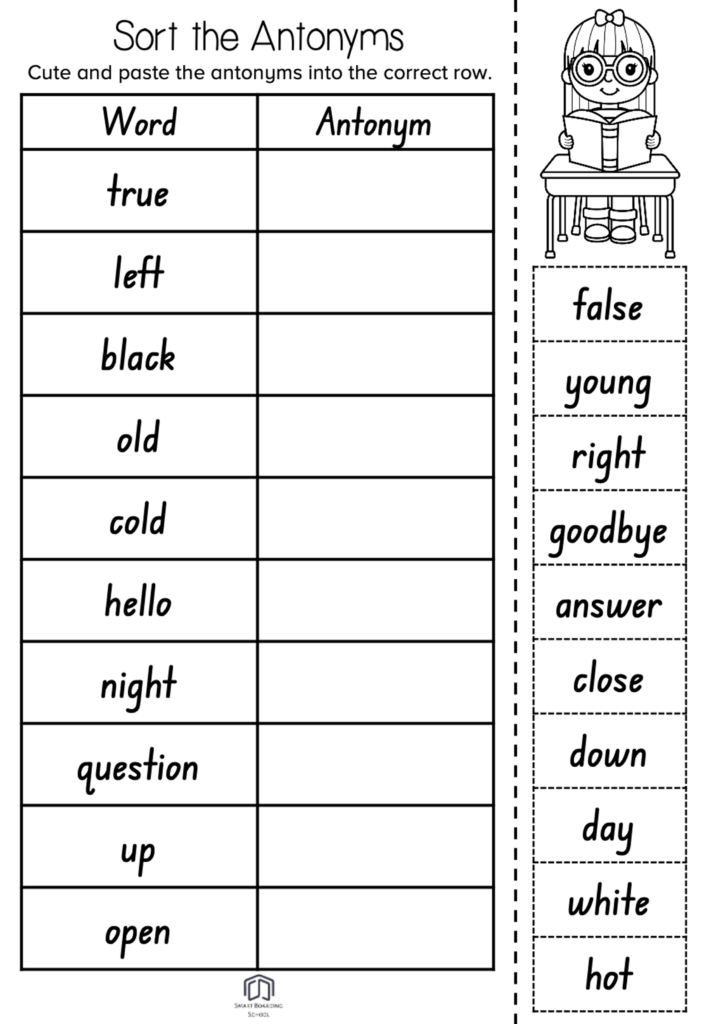
Worksheet Sort The Antonyms